
Middle Ear Infection: Symptoms, Causes and How to Treat It
What is Acute Otitis Media
Acute otitis media is (AOM) an infection of the middle ear (the area just behind the ear drum). In Australia, 3 out of 4 children will experience at least once episode of AOM by the time they start primary school. It is most common between the ages of 6 to 24 months.
AOM often presents with ear pain and fever. Young children may be irritable and pull on their ear. Adults get AOM much less frequently than children. In the vast majority of cases acute otitis media will get better on its own.
A doctor will diagnose otitis media by looking inside the ear with an otoscope. The ear drum will usually be red and bulging due to the build-up of fluid behind it.
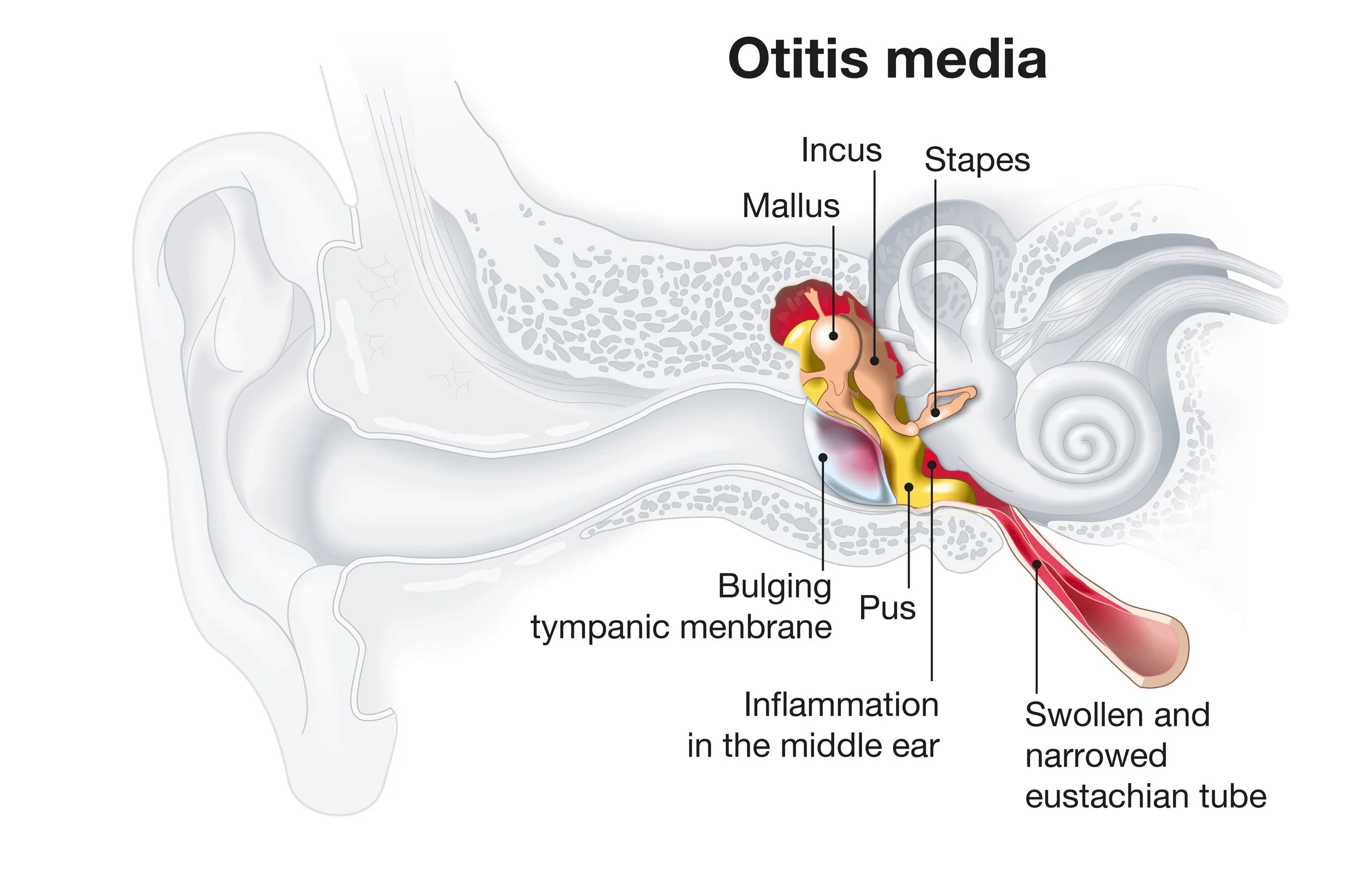
Otitis media causes the ear drum to bulge due to a build-up of fluid behind it.
What causes AOM and why is it more common in children?
AOM can be either viral or bacterial. It often occurs following a cold or other upper respiratory tract infection.
Kids have smaller eustachian tubes (the canals linking the middle ear to the back of the throat), which makes it easier for bacteria and viruses to travel to the middle ear.
How is AOM treated?
AOM is usually treated conservatively. Pain can be managed with over-the-counter pain killers such as paracetamol (e.g. Panadol) and ibuprofen (e.g. Nurofen). If the pain is severe your doctor may also recommend analgesic ear drops such as Auralgan. However, they will only do this if the ear drum is intact. Decongestants and antihistamines are not usually recommended.
The vast majority of simple AOM cases will get better by themselves. However, if your child’s symptoms fail to improve within 48 hours your GP will usually start an antibiotic called amoxicillin.
If a perforation is present and there is discharge from the ear, they may also recommend tissue spears, rolled up tissues used to mop up any pus from the ear canal. Additionally, microsuction is a safe way of clearing discharge.
Some children are at higher risk of developing complications from AOM. These include infants under 6 months of age, Aboriginal and Torres Strait Islander children, children with a compromised immune system, children with living with Down Syndrome or cleft palate, and children who have hearing problems in the other ear. Your doctor might recommend starting antibiotics sooner in this case.
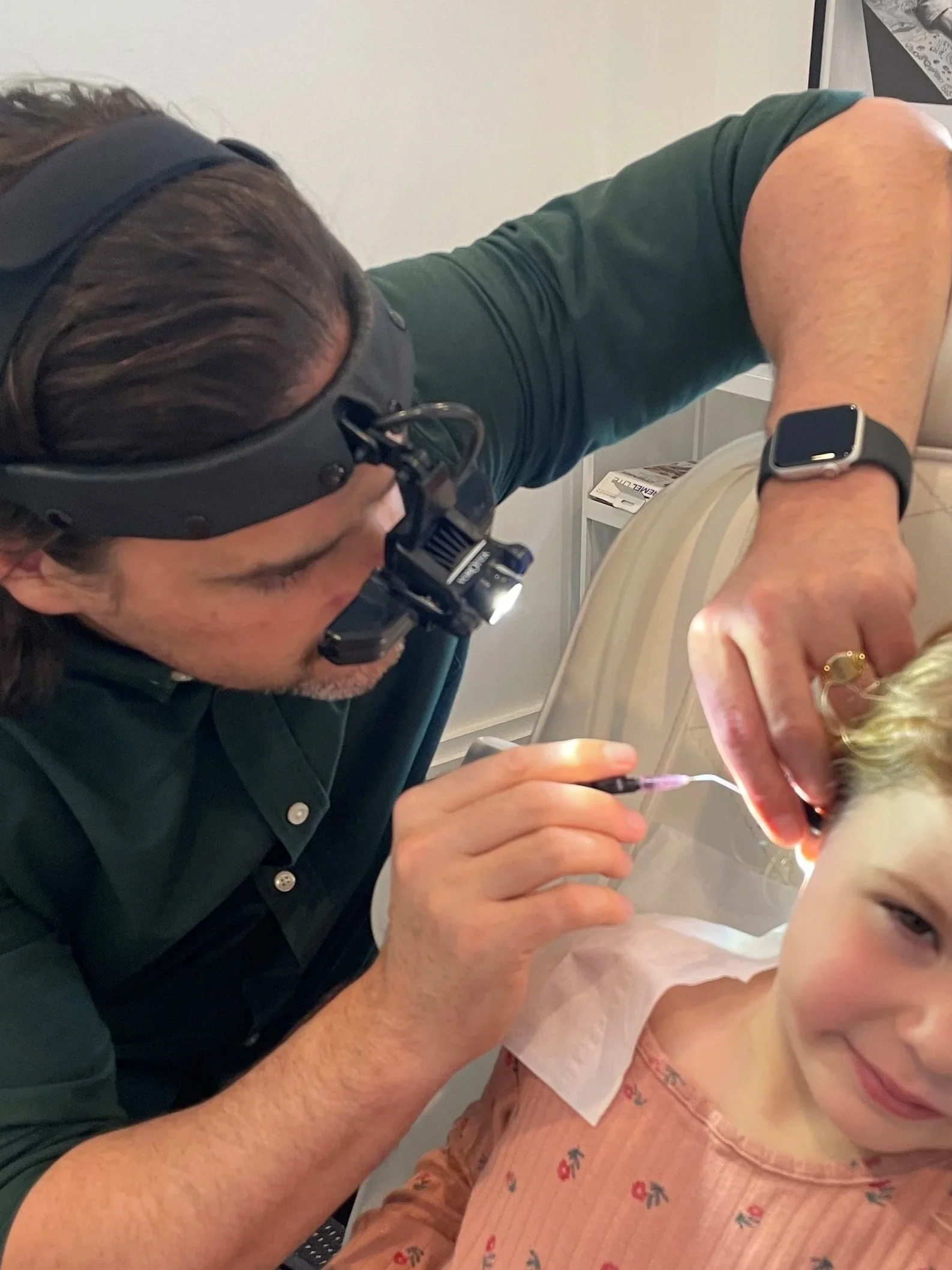
Microsuction is a safe way of clearing discharge in the ears of patients with otitis media.
How can I reduce my child’s risk of getting more middle ear infections?
Things you can do to reduce your child’s risk of further otitis media infections include; avoiding smoking around them, ensuring their vaccinations are up to date, breastfeeding babies for the first six months of life if possible, and avoiding dummies after six months of age.
When is AOM a concern?
Infrequent episodes of AOM usually don’t lead to problems. However frequent or chronic infections (such as CSOM) can lead to periods of prolonged hearing loss.
If your child gets frequent episodes of AOM (more than 3 in a six-month period, or 4 episodes in a year) they may benefit from assessment by an audiologist.
Microsuction can also be useful to clear debris from the ear canal once the infection has resolved if feelings of blockage persist.
What other types of Otitis Media are there?
Otitis Media with Perforation
There may be a small hole in the tympanic membrane (ear drum). This can actually lead to an improvement in pain as the pus is able to leak out and it takes pressure of the ear drum.
Otitis Media with Effusion (also known as Glue Ear)
Not an acute infection, but a collection of fluid in the middle ear as a result of a recent infection.
Chronic Suppurative Otitis Media (CSOM)
A long-term middle ear infection associated with an ongoing discharge from a perforation in the ear drum. It is a major cause of hearing impairment, and can lead to significant problems later in life.
Further Reading
Acute Otitis Media – Royal Children's Hospital Melbourne https://www.rch.org.au/clinicalguide/guideline_index/Acute_otitis_media/
Antibiotic use for acute otitis media in children – RACGP https://www.racgp.org.au/clinical-resources/clinical-guidelines/key-racgp-guidelines/view-all-racgp-guidelines/first-do-no-harm/patient-resources/antibiotic-use-for-acute-otitis-media-in-children
Otitis media (middle ear infection) – Health Direct https://www.healthdirect.gov.au/otitis-media
