
Treating Glue Ear in Children: How Clear Ears Perth can help
What is Otitis Media with Effusion (OME) or “Glue Ear”
Glue ear (also known as otitis media with effusion) is a condition resulting from the accumulation of fluid in the middle ear. It is common in young children and can cause temporary hearing loss.
Glue ear is not an infection but rather a consequence of one or more middle ear infections in the past.
Almost 80% of children will experience glue ear at some stage. Often glue ear will resolve on its own, but in cases where it doesn’t minor surgical procedures such as grommets may be required.
How does Glue Ear present?
Older children may describe trouble hearing
Parents or educators of younger children may notice they are having difficulty following instructions or are asking for things to be repeated
Children might pull at their ear
Some children might experience balance issues
Very young children might be irritable or not sleep as well as they used to
Why can Glue Ear be serious?
Early childhood is a crucial period for speech and language development. Prolonged periods of hearing loss can lead to speech and language delays, which can also affect social development.
How is Glue Ear diagnosed?
OME can be difficult to appreciate visually, so a combination of tests are used to confirm the diagnosis. The gold standard for OME diagnosis is assessment of both the appearance and the compliance of the tympanic membrane (ear drum).
The appearance of the tympanic membrane can be assessed by video otoscopy. The compliance (mobility) can be assessed by either pneumatic otoscopy or tympanometry.
Both video otoscopy and tympanometry are available at Clear Ears Perth.
How can Clear Ears Perth’s audiologists help?
Assessment by an audiologist is the gold standard for any child that has had OME for 3 or more months. It is also strongly recommended at any time if there is hearing loss causing speech or language delays. Audiologists will assess your child’s ears using a combination of techniques including video-otoscopy, tympanometry and pure-tone audiometry.
Paediatric microsuction and audiometry have long wait times for referrals in the public system. Private clinics such as Clear Ears often have minimal wait times and can offer comprehensive hearing assessments. After carrying out the below techniques our audiologists will send any results on to your GP or specialist for continuity of care.
Video-otoscopy
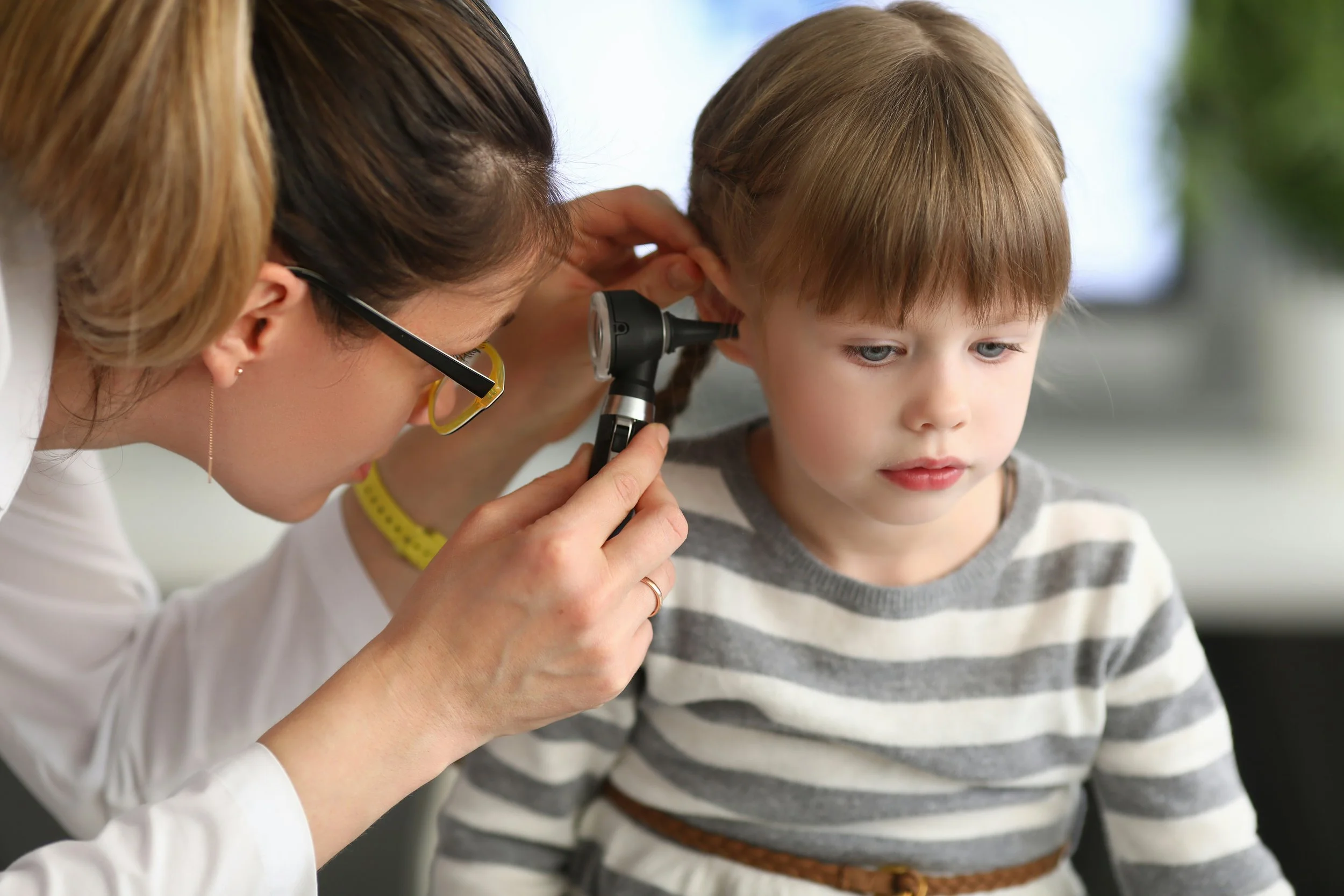
Video-otoscopy simply means looking inside the ear canal with a camera. The audiologist will be able to see the ear canal and ear drum. In OME, there may be changes to the colour and shape of the ear drum due to build up of fluid behind it, in the middle ear. Video-otoscopy is also useful for excluding other causes of blocked ears such as wax build up, infections or even small objects like beads a child may have put in their ear.
At Clear Ears Perth, both you and your child will be able to see the video in real time on a screen. We can also send the images from your visit directly to your general practitioner. This can be really helpful for both diagnosis and in planning treatment.
Tympanometry
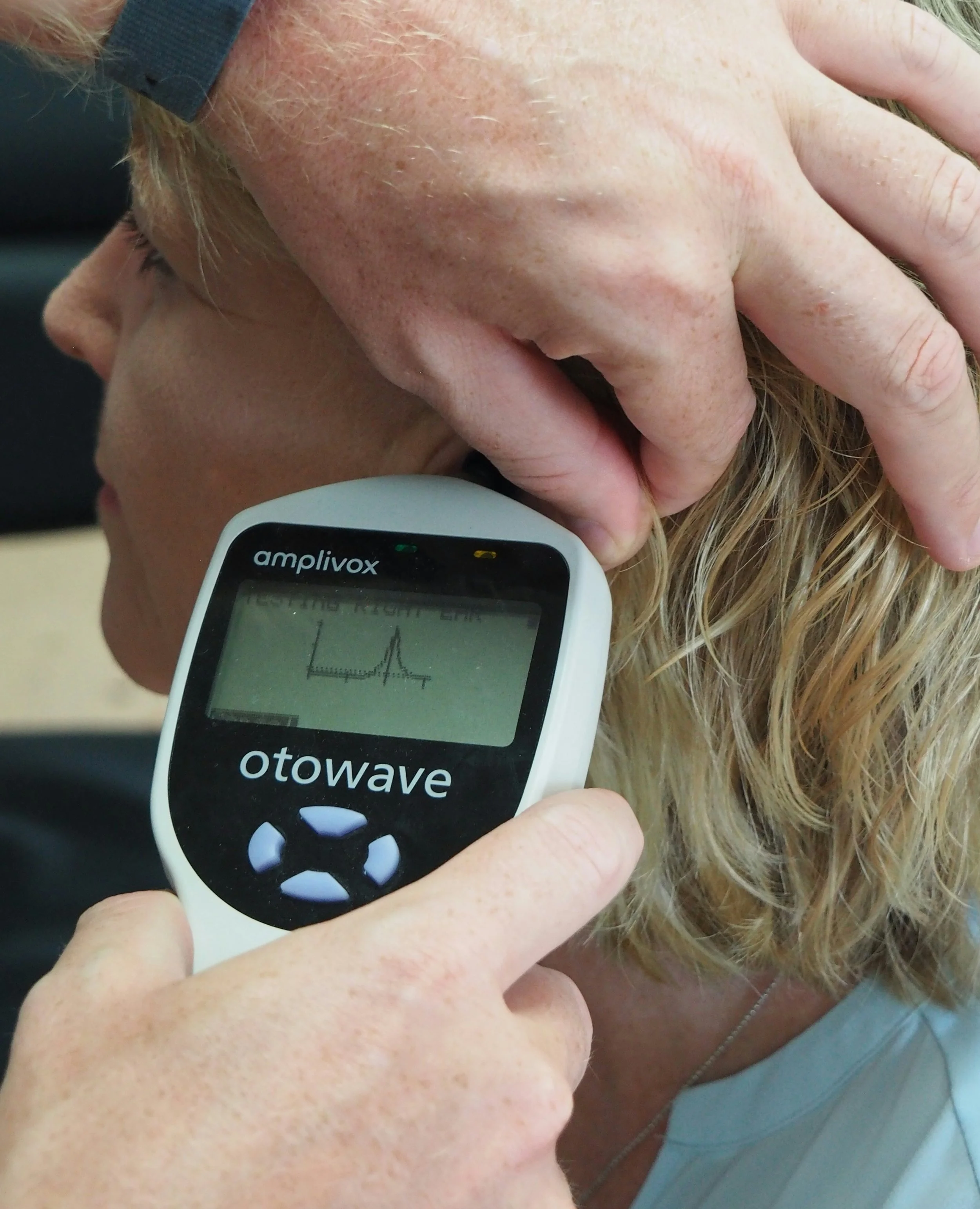
Tympanometry measures the movement of the ear drum in response to changing pressures. A device is inserted into the outer ear which then creates different pressures inside the ear canal while emitting different sounds. While tympanometry might feel a little strange, it not painful and is quite a quick procedure.
The information generated from this procedure is then put into a graph, which your audiologist will review. They will look at both the shape of the graph and the ear canal volume (ECV).
Glue ear typically generates a flat shaped graph (also called a type B tympanogram) because the fluid in the middle ear pushes against the ear drum, which means it moves less in response to sounds. Flat shaped graphs can also be due to other causes such as perforations in the tympanic membrane (holes in the ear drum) or blockages in the ear canal (wax or small objects).
In glue ear, the ear canal volume will usually be normal as only the volume of the outer ear is measured. If grommets or perforations are present the ear canal volume will be larger as the area behind the ear drum (middle ear) will also be included in the measurement.
Tympanometry can be used to pick up and monitor small perforations associated with glue ear, as they can’t always be seen in video otoscopy.
Tympanometry is also useful to monitor progress and effectiveness of treatment. Some young children find it difficult to stay still for video-otoscopy, but tolerate tympanometry much better.
If your child has had grommets inserted, tympanometry can be a really easy way to check they are working properly, and haven’t fallen out or become blocked. If grommets are in place and not blocked, the tympanogram will have a more pronounced peak (type A tympanogram) which indicates that the ear drum is more mobile, and have a large ECV meaning that air is flowing freely between the outer and middle ear.
If a grommet becomes blocked, the tympanometry graph will look similar to the original glue ear tympanogram with a flat graph and normal ECV. If it has fallen out, there will initially be a small hole (large ECV), which will usually heal by itself within a year. A normal ECV is a good sign it has healed.
Audiometry
Pure tone audiometry is a type of hearing test. It measures hearing through 2 different methods; air conduction and bone conduction. The person being tested sits in a quiet room and wears a pair of earphones. A range of different tones are delivered and the quietest level at which then can be heard is measured. The process is repeated with device that emits vibrations placed over the bone behind the ear (mastoid).
The first process tests for air conduction hearing loss which is caused by problems in the outer or middle ear. The second test assesses hearing via bone conduction which looks at problems in the inner ear or in the nerve supplying the ear.
Pure tone audiometry can identify problems with air conduction hearing loss in children with glue ear. The fluid in the middle ear makes it harder for sound to travel through. It can also identify how severe the hearing loss is, which can help to plan treatment.
Clear Ears Perth offers hearing tests for children aged 4 and over. Identifying hearing loss early is essential in young children. If undiagnosed it can significantly affect speech and language development. Prompt diagnosis allows for early, targeted treatment.
How is Glue Ear treated?
The vast majority of OME will resolve by itself within 3 months. There is no evidence to support the routine use of antihistamines, steroids or decongestants for simple, uncomplicated OME.
However, if your child’s hearing is significantly affected, or they are experiencing speech and language delays, early intervention is really important as it can also affect their social development. You may be referred to one or more of the following health professionals.
Ear, Nose and Throat Surgeons
In certain cases, ENTs may suggest grommets. These are small tubes with are inserted into the ear drum to allow the fluid to drain out and the middle ear pressure to equalise with the outside air pressure. In children this is usually done under a general anaesthetic. Grommets are not permanent and will usually fall out by themselves after a period of time.
Speech Pathologists
They work with children and families to address speech and language delays. They can recommend communication strategies to help children and their families.
Audiologists
Aside from monitoring progress, audiologists can also provide a temporary hearing device. If your child is experiencing moderate or greater hearing loss (>30dB), and there is a long wait for surgery, they may benefit from assistance to hear better in the meantime.
How can I prevent glue ear?
There are certain things that increase the risk of glue ear. Children who attend daycare, are bottle fed or have siblings are more likely to experience it. You can reduce your child’s risk by:
Avoiding smoking around children
If your child has bottles, ensure they are fed in an upright position rather than in a supine (lying down) position
Encouraging good hygiene such as hand washing to prevent colds and other upper respiratory tract infections
Ensuring your child is up to date with their vaccinations (especially the pneumococcal, influenza and RSV ones)
Further Reading
Glue Ear – Health Direct https://www.healthdirect.gov.au/glue-ear#complications
Tympanometry https://www.bozwell.co.uk/tymp.html
Glue Ear – A Guide for Parents, Aussie Deaf Kids https://www.aussiedeafkids.org.au/about-hearing-loss/causes-of-hearing-loss/glue-ear-a-guide-for-parents/
Grommets Procedure Fact Sheet https://www.schn.health.nsw.gov.au/grommets-procedure-factsheet
